Friday, March 4, 2011

The Best Baby Showers Gifts to Give


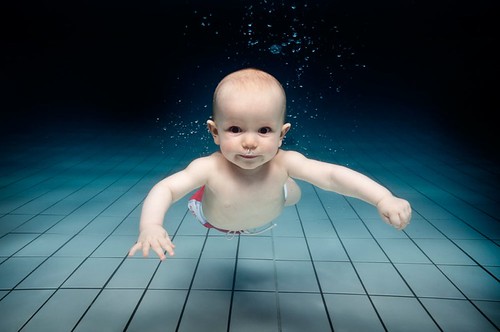
Baby swim by Eythor


celtics baby clothes


When your friend announces the wonderful news of a new arrival the thought always turns to what you want to buy the baby that will be of most use. Having had my first baby and 2 showers I received several gifts that were total life savers and am forever in debt to the people who bought them.

The coolest thing I received was a Fischer Price Oceans of Wonder cradle swing, this is the best gift I could've ever asked for, it has 2 ways to swing, plays melodies has lights as well as 10 different speeds. I was able to use this from day 1 up until my little guy got 25 pounds. This was truly awesome as the baby was able to nap and the fish and lights held his attention long enough for mom to get housework done.

Diapers are always a great gift because parents go thru so many, the trick is to give a few packages in the larger sizes as many new parents receive so many smaller sizes and babies grow so fast. A case of diaper wipes is also helpful as they tend to last longer.

The Fischer Price Deluxe Jumperoo is also a great gift, the baby can start using around 4 months of age, it helps strengthen their legs and provides plenty of entertainment. I found this to be a great way to get a moment of peace when having a hectic day.

The Womb Bear is also great to help baby sleep at night, it makes the sound of a heartbeat and reminds baby of time spent in the womb.

Gift cards are also great as their are many last minute things that parents need or want, and can be used to buy many different things.


These are some great suggestions and good luck with the shopping

Sunday, February 27, 2011

Anglin's Wedding Photography in Bend Oregon


Edinburgh Photography, Dancing in the Street by John Gilchrist


Photo Credit: celtics baby clothes


Anglin’s Wedding Photography will preserve your wedding memories with their exceptional and incomparable talents. Jake and Shereen Anglin can create beauty on film that will last a lifetime! Together, they capture the sentiment of a couple’s once in a lifetime event, their wedding day. Anglin’s portraits are incredibly intimate and share a level unlike any other wedding photographers endeavors.

The level of intimacy captured and preserved on film between the bride and groom is unsurpassed and enduring. While viewing Anglin’s sample portraits from their website www.Anglins.com, you can almost feel the emotional and intimate nature of the wedding with the soft focus and moody lighting the Anglins use. For any couple, their wedding day can be the most anxious and exciting day of their lifetime together. Photographs of this moment should be intimate not only with the wedding party but should include seemingly simple fundamentals of the wedding such as the environment, the décor and guests.
No two weddings are identical because no two people are identical. Each wedding is as unique as you and the Anglin’s expose the individuality and style of your wedding portraits. On the website, a happy couple by the water is holding up a big Thank You sign; they really appreciate your business! The Anglin’s not only take the traditional wedding shots but they also create portraits with natural body movements with natural expressions that are difficult to do in posed portraits.

Their portraits are very detail oriented with great elemental compositions. Their photographs not only portray close-ups among the bride and groom, but they also capture the smallest minutiae of the wedding and their sample portraits show an assortment of close-ups of the wedding jewelry worn or the candles lit beside a wedding cake. Another precise photograph is of white chairs and the bride’s bouquet and in yet another, the bridal bouquet on the table with lit candles only further giving an artistic element captured on film. These are small moments the bride has dreamed about her whole life. Even when the lighting seems low they capture a well lit environment that exposes the low light elements and details with clarity. Their wedding portraits carry artistic appeal. Precise close-us of a wedding cake so detailed you can actually see the very crumbs and it is elegant and beautifully done. Their special effects portraits are luminous, vibrant and brilliant with pure clarity.

Anglin’s Photography is operated by the owners, Jake and Shereen Anglin and they are truly a wonderful dynamic team. They formulate a great portraiture plan to make the wedding day a very treasured and memorable event. In addition, the Anglin’s are great to work with and they have fantastic idea’s that can be incorporated individually for uniqueness in the photographs. They are a very charming and loveable pair with vibrant personalities that make you feel very relaxed, comfortable and welcomed even when the heat of the wedding day turns on. These photographers have an artistic flare not only capturing a moment in time on film for the newlyweds but they add artistic beauty and value to the portraiture package. Anglin’s Photography offers a wide range of pricing and package arrangements with both color and black and white portrait’s. They also do engagement portraiture and this could be an added bonus for the busy bride and groom. Anglin’s Photography in Bend Oregon is precise and experienced. Please visit their website at WWW.anglins.com for further information.


Six Tips to Help You Clean and Organize Your Photography Studio


Edinburgh Photography City Bypass Speedway Race Track by John Gilchrist


photo source


1. Photography Studio Organization - Use good old fashion hanging files.

Believe it or not, in this digital age, the classic green hanging folder is still a great organization tool. Using manila folders to organize your photography studio's bills, invoices, and receipts is a good start. It is a lost cause however, if you don't have an organized place to put them. The hanging folder is the perfect place to put them

Don't have a filing cabinet to put the hanging folders in? Not a problem. There are several options available at your local retail store. I prefer the clear Rubbermaid bins. They are about 8 inches wide. This means they are easily stored in closets or on a bookshelf. Since photography studio space is usually valuable real estate, these smaller file boxes might be the way to go.

2. Photography Studio Organization - File your files

A great way to keep your files organized is to keep a file of all your files. What do I mean by this? Keep a piece of paper in your photography studio with all of your file folders on with their names. If the folders have sub-folders, list those too.

This will let you see if you have folders that overlap so that you can condense your folders. For example, there is no point in having studio file and a studio equipment file.

You could have this list written on a piece of paper, but that would just be one more piece of paper to file. Try keeping this record in a word or excel document. That way you have one less piece of paper in your office and you can update it much easier when you add new folders and files.

3. Photography Studio Organization - Throw things away

For some reason most photography studio owners have a fear of throwing client paperwork and photos away. There are certain things that you just don't need to hang on to. If you are a digital photographer there is no reason to hold on to basic prints. Create a varity of back-ups and toss the prints. You can always re-print them. If you aren't a digital photographer and have a traditional photography studio, invest in a scanner. This way, if you must hold on to prints for color purposes, you can scan them and toss the print.

There are some things you need to hold onto though.

Tax items are one thing you should hold onto. You should save your tax returns forever. The rest of your tax reports and receipts should be saved for no longer than six years.

Throw away papers that you don't have an immediate need for, can get a copy of easy, or that don't have any tax or legal reason to hold on to.

If you feel like you need to hold on to all your photography studios paperwork, than try scanning it all onto a portable hard drive. Then you can throw all the papers away. It will take more time than growing through all the papers away, but at least the hard drive will take up less space in your office.

You can scan model's head shots for reference later. You can scan pose ideas from magazines so you don't have clipping all over your photography studio.

4. Photography Studio Organization - "Assorted" Folders

How many other, assorted, or misc files do you have in your photography studio? You know, the folder that you put everything in that you just don't know where else to put it. That isn't organization. Odds are you can just throw it away altogether. A good rule of thumb is, if you haven't needed it or touched it in a year then toss it.

5. Photography Studio Organization - Get rid of business cards

There are so many ways to organize all your business cards, model head shots, and contact information. There are plenty of ways to get rid of it altogether as well. A simple approach is to take the business card or headshot and tape it or staple it the file folder it is associated with. At least then it is filed away instead of in a pile on your desk or in a drawer.

There are lots of gadgets out there made for scanning in business cards to your computer. If you are a digital photography studio, you probably already have a scanner, put it to good use. If you don't have the money for one of these than just take some time to enter the contact information into your electronic address book. Outlook has a great address book or you could even use your email clients address book. Anything is better than having them just laying around waiting to get lost.

6. Photography Studio Organization - Use the computer

Try using your photography studio's computer as much as possible. Use it to make your to-do lists, create address books, file documents, and more. The more you keep or put into your computer the less you have in your photography studio.

As I mentioned before, there are plenty of gadgets out there that can help you scan your files into the computer. Take advantage of them!

Saturday, February 26, 2011

Anglin's Wedding Photography in Bend Oregon


Cuba Gallery: California / Los Angeles / city / Santa Monica / color / blue / circus / ferris wheel / amazing / sky / summer / background / clouds / fun / photography by ►CubaGallery


credit,photo source


Anglin’s Wedding Photography will preserve your wedding memories with their exceptional and incomparable talents. Jake and Shereen Anglin can create beauty on film that will last a lifetime! Together, they capture the sentiment of a couple’s once in a lifetime event, their wedding day. Anglin’s portraits are incredibly intimate and share a level unlike any other wedding photographers endeavors.

The level of intimacy captured and preserved on film between the bride and groom is unsurpassed and enduring. While viewing Anglin’s sample portraits from their website www.Anglins.com, you can almost feel the emotional and intimate nature of the wedding with the soft focus and moody lighting the Anglins use. For any couple, their wedding day can be the most anxious and exciting day of their lifetime together. Photographs of this moment should be intimate not only with the wedding party but should include seemingly simple fundamentals of the wedding such as the environment, the décor and guests.
No two weddings are identical because no two people are identical. Each wedding is as unique as you and the Anglin’s expose the individuality and style of your wedding portraits. On the website, a happy couple by the water is holding up a big Thank You sign; they really appreciate your business! The Anglin’s not only take the traditional wedding shots but they also create portraits with natural body movements with natural expressions that are difficult to do in posed portraits.

Their portraits are very detail oriented with great elemental compositions. Their photographs not only portray close-ups among the bride and groom, but they also capture the smallest minutiae of the wedding and their sample portraits show an assortment of close-ups of the wedding jewelry worn or the candles lit beside a wedding cake. Another precise photograph is of white chairs and the bride’s bouquet and in yet another, the bridal bouquet on the table with lit candles only further giving an artistic element captured on film. These are small moments the bride has dreamed about her whole life. Even when the lighting seems low they capture a well lit environment that exposes the low light elements and details with clarity. Their wedding portraits carry artistic appeal. Precise close-us of a wedding cake so detailed you can actually see the very crumbs and it is elegant and beautifully done. Their special effects portraits are luminous, vibrant and brilliant with pure clarity.

Anglin’s Photography is operated by the owners, Jake and Shereen Anglin and they are truly a wonderful dynamic team. They formulate a great portraiture plan to make the wedding day a very treasured and memorable event. In addition, the Anglin’s are great to work with and they have fantastic idea’s that can be incorporated individually for uniqueness in the photographs. They are a very charming and loveable pair with vibrant personalities that make you feel very relaxed, comfortable and welcomed even when the heat of the wedding day turns on. These photographers have an artistic flare not only capturing a moment in time on film for the newlyweds but they add artistic beauty and value to the portraiture package. Anglin’s Photography offers a wide range of pricing and package arrangements with both color and black and white portrait’s. They also do engagement portraiture and this could be an added bonus for the busy bride and groom. Anglin’s Photography in Bend Oregon is precise and experienced. Please visit their website at WWW.anglins.com for further information.


Using Depth of Field for Photography


Cuba Gallery: Australia / Melbourne / Luna park / circus / retro / vintage / people / fun / scary / sepia / photography by ►CubaGallery


source


It's one of the greatest tools available to photographers, it's easy to use, and yet it's among the least known and used abilities of a camera today. Pro photographers have used it for decades, but the amateur can use these same techniques without paying the professional price. It's called depth of field, and it's accessed through the use of the aperture.

The aperture, simply put, is the hole that light comes through in your camera. Light passes through the front of the lens, through a series of glass pieces, through a hole at the back of the lens, and into the camera. The aperture is the hole in the back of the lens, and you get to control this vital part of the camera, if you decide to want to bump up your pictures. You can place the camera on auto, and the camera will adjust its aperture, shutter and more to the situation it sees. By placing the camera in more manual modes, you take on powerful and personal control, and YOU get to decide what you want to create with your photographs.

An important factor here is lighting. Any photography relies heavily on the lighting that you are using, whether it be from the natural, ambient light around you, or artificial light, like a strobe or other flash unit. Especially while using natural light, it will be important to use a tripod to keep the camera steady while shooting. If you are shooting on a cloudy day, without much light, then the camera must compensate for less light by having a longer shutter speed, which it will do automatically in the mode I'll be explaining in a moment. A longer shutter speed means the camera won't be able to have a clearly focused picture without the use of the tripod.

Depth of field simply means the area of focus, or the area in the picture that is in focus might be a more accurate term. Photography is a two dimensional medium, having height and width, but it lacks depth, the third dimension. Your photography can create the illusion of that depth through a few easy camera settings. You may be asking yourself, why would I want to create the illusion of depth, and what is it good for? Part of the reason is to create a sense of emphasis. When you take a picture of a large area, with trees, birds, squirrels, people, rocks, etc, what is the thing or object that you are zeroing in on? Is there anything that you really want to emphasize to your viewer? If so, it's probably getting lost in the crowd of other things on the scene. The squirrels are so small you can barely see them, the people are walking their dogs, and the trees are swaying in the breeze. But what if you wanted to focus on the viewer on the flowers in the garden? When you create emphasis on an object, it strengthens your photo, and actually guides the eye of the viewer to that object. You could take pictures to create a story about that, as you can read in my article about photo stories. When you get in to take close-ups of the flowers is where the possibilities of great photography begin.

Emphasize the garden by focusing in on one or two flowers at a time. Grab a tripod, get down to eye level with them, and then get ready. Place your camera in a mode that allows you to change your aperture; the mode is usually called "A", or "AV" on some models. Film cameras can allow these changes too, on SLR models. They require you to simply change the f-stop manually on the aperture ring. On your digital camera, use your selector buttons to change your aperture. You'll see on your digital camera, most likely, a letter f, with the number on the readout on either the monitor, or the info panel on the top of the camera, or perhaps both areas. The f means f-stop, which is the name commonly used to describe the number of the aperture setting. The best way to emphasize a flower is to have only that flower in focus, and to have the rest out of focus. Change your aperture to a really low number, such as 2.8, 4, or 5.6. When the lens is at a low number like this, the lens hole is wide open, but it is creating a small area or depth of field; basically an inch or two will be in focus. Focus your camera, and shoot. Now, look at the camera, and look at your pictures. The one or two flowers should be in focus, but do you see how the background is fuzzy and out of focus? This is what is called a "shallow depth of field", and that comes from using a small number f-stop. That's because you've taken control of your camera, and changed the outcome! Because only the flower is in focus, and the rest is blurred out, you have guided your viewer to what YOU want to emphasize! You have used one of the most powerful tools available for a photographer to bring a new focus to your pictures. Try this with a lot of different scenes; look how the item is forced to really stand out for you because it's the only thing in focus.

Now, on the opposite end of the spectrum are the pictures that have the entire photograph in focus; such as a lighthouse standing out from the beach, with horseshoe crab shells in the immediate foreground. This is also done by changing the depth of field of your camera. Here, you again change your aperture, but this time place it on a high number like 16, 22, 28, etc. This is to create a large depth of field by using a small hole in the back of the lens. Again, you must use a tripod to keep the camera steady. Take a picture with something in the near foreground, such as a rock or the crab shells, and then compose your picture with a mountain or some other object some distance away, focus, and shoot. Remember to use the rule of thirds here for additional emphasis. As you'll see, both areas should be in focus, again showing the third dimension and creating the illusion of depth. This is a large depth of field.

It's a little known tool in the photographer's toolbox, but almost any camera made in the past four years will have some sort of ability to work with depth of field, whether they have a point and shoot or DSLR. Every photographer, of every level, has the ability, through practice, to create beautiful photographs that can rival those of the pros, by using the tools available with every camera. Use the strength of depth of field when you create the third dimension in your photographs, and add a new and incredibly
powerful personal dimension to your photography.

Sunday, April 11, 2010


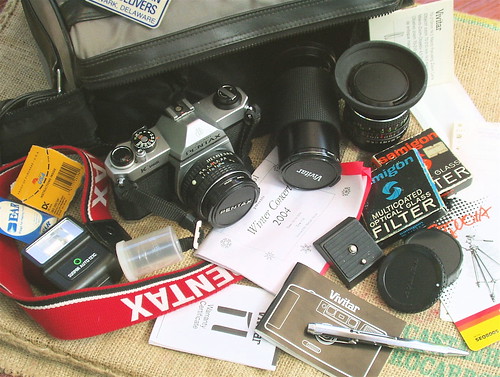
What's REALLY in my 35mm camera bag? - with Flickr notes! by Earl - What I Saw 2.0


Digital camera batteries are specifically designed for the unique way digital cameras use energy – in big power bursts. Digital camera batteries have substantial power with a much longer life than alkaline AAs.


Batteries for portable consumer devices are principally made using technologies such as:


- Nickel Cadmium (NiCd)


- Nickel Metal Hydride (NiMH)


- Lithium Ion (Li-Ion)


Each type has unique characteristics manufactured for different uses.


NiCd and NiMH:


The main difference between the two is the fact that NiMH (the newer of the two technologies) offer higher energy densities than NiCds. NiMH are less prone to problems and require less maintenance and care. NiMH are also more environmentally friendly than their NiCd counterparts, since they do not contain heavy metals(which present serious landfill problems).


Li-Ion:


Li-Ion produce the same energy as NiMH but weigh approximately 35% less. This is a definite consideration in portable devices where the battery makes up a significant portion of the device’s weight.


Another reason rechargeable Li-Ions have become so popular is that they do not suffer from memory effect at all. Memory effect is voltage depression caused by improper recharging.


They are also better for the environment because they don’t contain toxic materials such as Cadmium or Mercury.


Rechargeable digital camera batteries are rated in “mAh”. The mAh stands for Milliamp Hour, a technical term for how much power a particular battery will hold. Those with higher mAh values theoretically last longer without requiring a recharge, allowing you to take more photographs before you have to replace your cells.


It is recommended when installing batteries that their mAh values match. Otherwise, it is possible that one will drain before the others, causing extra strain on the others, or preventing further photo taking until all are replaced.


- Help and Tips


Cameras consume battery resources quickly, even rechargeable ones, so you should always carry extra. NiMH tend to last much longer than most standard alkaline AAs – plus, are rechargeable, so they can be re-used for quite a long time.


Turn off your digital camera when not in use. Don’t stop after taking every photo and look at the picture in playback mode. If you are using MicroDrive media, be forewarned that these miniature hard drives may take up quite a bit more power than Compact Flash cards.


Rechargeable batteries don’t stay charged forever. They tend to lose a little of their power every day. If you recharge often and frequently use your digital camera, you will probably never notice this loss. However, after a couple of weeks, the loss may be noticeable, and after a couple of months or longer of non-use, those once were ready-to-go but now may have lost enough power to make them unusable.


If you are not planning on using your digital camera for a while, it may be wise to take your batteries out for storage. This reduces the chance of chemical leakage and corrosion, which can seriously damage your equipment.


If you plan on taking photos in colder weather or snowstorm, note that batteries may hold their power for shorter periods of time than in warmer weather. You may either want to bring extra during your photo shoot or look for those specially rated to handle colder temperatures.


If it is raining, or if you are near an area of running water such as a waterfall, be extremely careful. Get at a safe distance from the water before you change out the power cells. Water can corrode, possibly causing leakage, and this can damage your equipment.


The quit and dirty:


What this camera does well:


1. Zoom


What this camera does not do well:


1. Take pictures in bright light – the camera can’t balance the light and dark portions of a frame. I tried every setting and it just does not work. Part of the picture is over exposed and the other part is underexposed. Forget taking pictures on sunny days. This camera just can’t handle sun.


2. Take pictures in low light – the camera can’t adjust the shutter speed and aperture in low light. Unless you have a tripod ALL low light (including predusk) images will be blurry.


3. Preserve batteries – This camera eats batteries like I have never seen. Two days max for heaving use.


4. Take decent video – the video and sound quality are poor. While you can zoom in and out in video mode, the autofocus is so slow that zooming cause significant amounts of blurred video.


If you still want to buy this camera after reading the four cons listed above, then you are not serious about photography.


I took this camera on a 10 day trip to Europe and within the first two days, knew that I had wasted $150 on the purchase.


Rating: 2 / 5